
Motorcycle Mechanic Guides
Motorcycle Brakes Still Spongy After Bleeding: Diagnosis Guide
May
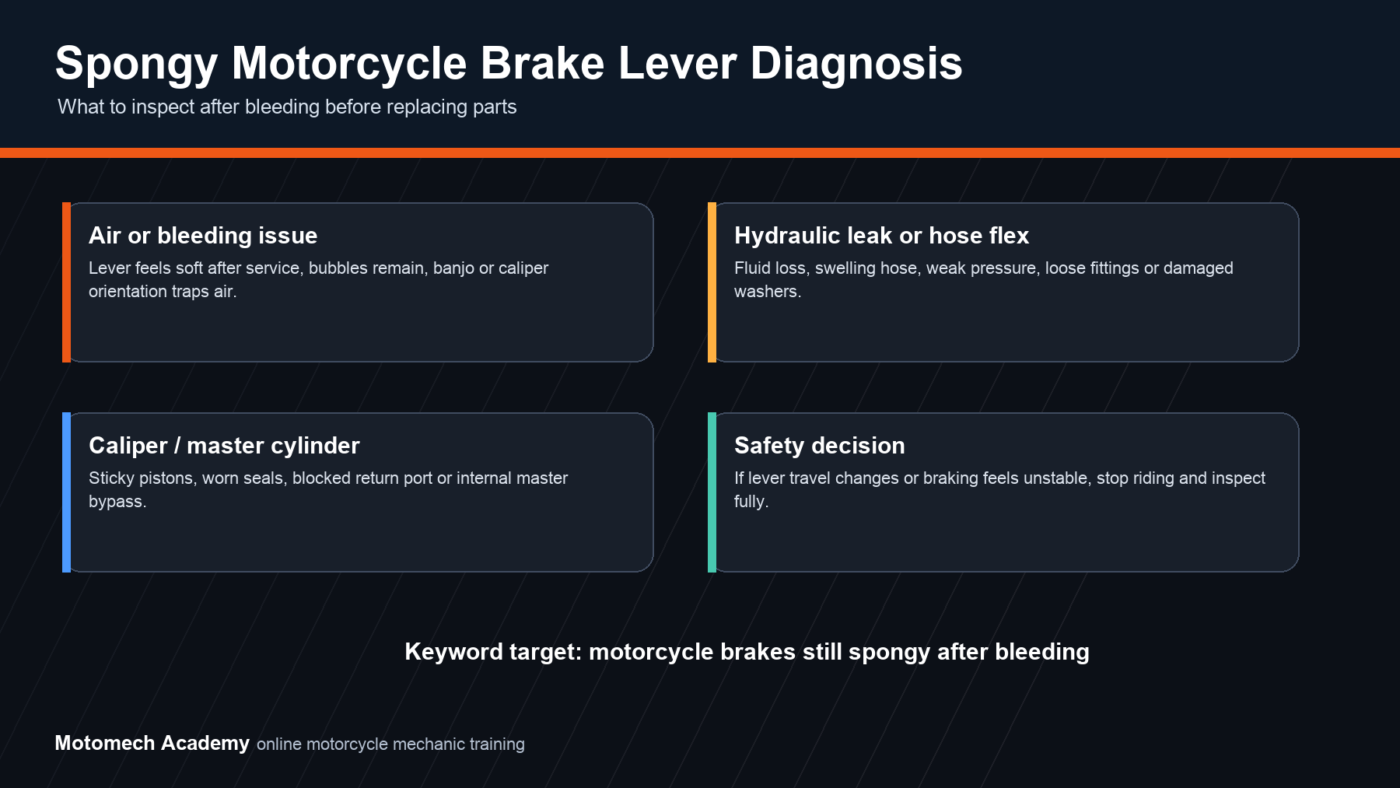
A motorcycle brake lever that stays spongy after bleeding is not something to ignore. It may be a simple trapped-air problem, but it can also point to hose expansion, a master cylinder fault, caliper piston issues, fluid contamination or an ABS-related bleeding procedure. Because brakes are safety-critical, the correct response is structured diagnosis, not repeated random bleeding.
This guide targets the Search Console query motorcycle brakes still spongy after bleeding and supports the related forum case already receiving impressions.
What a spongy motorcycle brake lever means
A firm brake lever usually means hydraulic pressure is building consistently. A spongy lever means something in the system is compressing, moving or bypassing pressure. Air compresses. Old hoses can expand. Seals can leak internally. Pistons can retract unevenly. Any of these can create a lever that feels soft even after fresh fluid has been pushed through the system.
Most common causes after bleeding
- Air still trapped: air can remain at banjo bolts, caliper high points, ABS modules or master cylinders.
- Wrong bleeding sequence: some systems need a specific order or ABS activation procedure.
- Old brake hose flex: rubber hoses can expand under pressure and make the lever feel soft.
- Master cylinder bypass: internal seals may not hold pressure even when there is no external leak.
- Caliper piston/seal behavior: sticky pistons or seal rollback can increase lever travel.
- Contaminated or incorrect fluid: wrong fluid or moisture contamination affects performance and safety.
Step 1: inspect for leaks and lever creep
Hold steady lever pressure. If the lever slowly moves toward the handlebar, suspect a leak, master cylinder bypass or a pressure-loss issue. Inspect banjo bolts, bleed nipples, hose crimps, calipers and the master cylinder. Even a tiny wet mark matters.
Step 2: check caliper position and trapped air points
If the bleed nipple is not at the highest point of the caliper, air may remain trapped. Some calipers need to be repositioned during bleeding. Tap the caliper and hose gently to move bubbles upward, but do not treat this as a substitute for the proper service procedure.
Step 3: evaluate hose condition
If the motorcycle still uses old rubber hoses, hose expansion may be part of the soft feel. Look for cracks, swelling, age, rubbing marks and previous damage. Braided lines can improve lever feel, but they do not fix air, caliper or master cylinder faults.
Step 4: consider ABS procedure
ABS-equipped motorcycles may need a procedure that cycles the modulator or follows a specific bleeding order. If air entered the ABS unit, normal lever bleeding may not be enough. Use model-specific service information before continuing.
When not to ride
If lever travel changes, pressure does not hold, fluid leaks, the lever reaches the grip, or braking performance is uncertain, do not ride the motorcycle. Reinspect and repair first. Brake diagnosis is one area where caution is not optional.
Related Motomech training
Study the complete system in the Motorcycle Brake Systems Course hub and then connect handling or tire symptoms with the Motorcycle Suspension and Chassis Course. For full foundational training, start from the Online Motorcycle Mechanic Course hub.
Forum case to compare
Use the live forum case as a companion: front brake lever gets spongy again two days after bleeding.
What to read next
Motorcycle ABS problems
For ABS light, wheel-speed sensor and brake safety checks, use the Motorcycle ABS Problems Diagnosis guide.


