
motorcycle technician training online: where should a future tech begin?
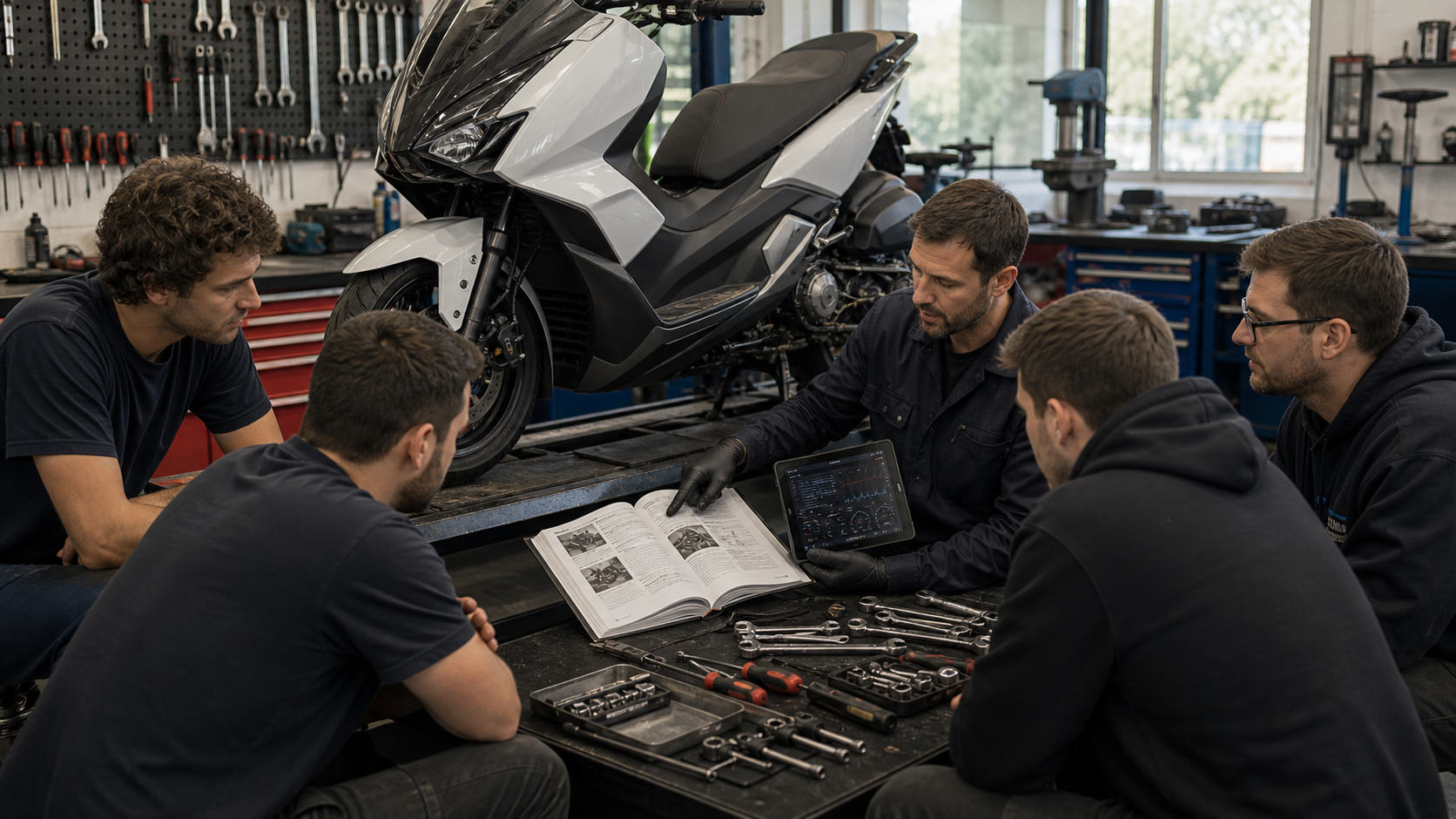
I am looking for motorcycle technician training online because I would like to move from hobby maintenance toward proper technician habits. I know that does not happen overnight.
I found this page while comparing options: motorcycle technician training online. I would like honest advice from people who have learned the hard way before I waste time jumping between random videos.
What should someone learn first if the long-term goal is to become useful in a real workshop?


Discussion
30 repliesMotorcycle technician training online should teach communication too. A vague complaint becomes expensive if nobody confirms it.
Confirming the symptom is huge. I once chased a no-start that was actually a rider using the kill switch wrong. We all became philosophers that day.
Brake and tire inspection should be day one for anyone who wants to work near customers bikes.
A technician is paid for method, not guessing
Thomas Spagnoli here. Motorcycle technician training online should begin with repeatable method. A technician listens to the complaint, confirms the symptom, checks safety, gathers evidence, measures, compares to specifications, repairs only what is proven and verifies the result.
The early training should be humble: inspection, service data, electrical basics, brake safety, tire and chain checks, customer notes, clean work habits and documentation. That may sound less exciting than engine builds, but it is what makes a junior technician useful.
A practical learning order
If you want a future in the trade, practice writing clear notes. The next person should understand what you saw, what you tested and why you made the decision.
The free course on the platform is a good starting point because it gives beginners an order. Use it together with forum cases: the course gives structure, and the forum gives real-world mess. That combination is much better than memorizing disconnected repairs.
Electrical training is where many beginners either level up or panic. Start with battery, grounds and voltage drop.
A future tech should learn clean work. Label parts, keep bolts organized, wipe spills, protect paint. It sounds basic until it is your bike.
Service data needs to be normal. Specs, torque, procedures, fluid type. Nobody should be embarrassed to check.
Motorcycle technician training online should include final road-test logic and when not to road test. Some faults need static checks first.
Correct. Safety decides the test plan. You do not ride a bike to discover whether the brakes might work.
Tool buying for future techs should be staged. Buy reliable basics and learn to use them properly.
Fuel and ignition diagnosis should be taught together. Same symptom, different system, test before buying.
Accessory wiring is a whole horror novel. Future techs need to recognize bad crimps and overloaded circuits.
Chain and sprocket inspection is easy to underestimate. A good tech sees wear before the rider feels it.
The note-writing advice is good. I never thought of documentation as part of motorcycle technician training online, but it makes sense.
Documentation protects the customer, the workshop and your own learning. It turns a repair into evidence instead of memory.
I would add customer honesty. Tell people what you know, what you tested, and what still needs confirmation.
That is the difference between a parts seller and a technician.
Motorcycle technician training online should include how to write a clear job note. That sounds boring until the next person has to understand your work.
Voltage drop under load is a perfect early technician lesson. It teaches measurement and patience at the same time.
A useful technician is not the person who knows the most shortcuts. A useful technician can prove a fault, explain the repair and verify the result. Motorcycle technician training online should practice that from the first week.
Clean work habits matter in a shop. If a beginner loses bolts and scratches panels at home, they will do it faster at work.
Fuel-pressure checks and ignition checks should be taught as decision points, not as random tests.
I like the point about when not to road test. Some safety faults should never leave the stand until fixed.
Correct. The test plan must respect the risk. Static verification comes before any ride when brakes, steering, tires, fuel leaks or severe electrical faults are involved.
Motorcycle technician training online should normalize looking up specs. I do not trust people who act like checking the manual is weakness.
I started writing symptom, test, reading and result in a notebook. It already makes me sound less confused when asking for help.
That notebook becomes your training record. Much better than trying to remember every lesson.
Motorcycle technician training online should make people comfortable with boring tests. Boring tests are usually where the answer is hiding.
That is very true. Motorcycle technician training online should reward careful confirmation more than dramatic repairs.
I like that. Motorcycle technician training online feels more achievable when the first goal is being reliable, not being impressive.