
motorcycle mechanic course online: is it enough before touching real bikes?
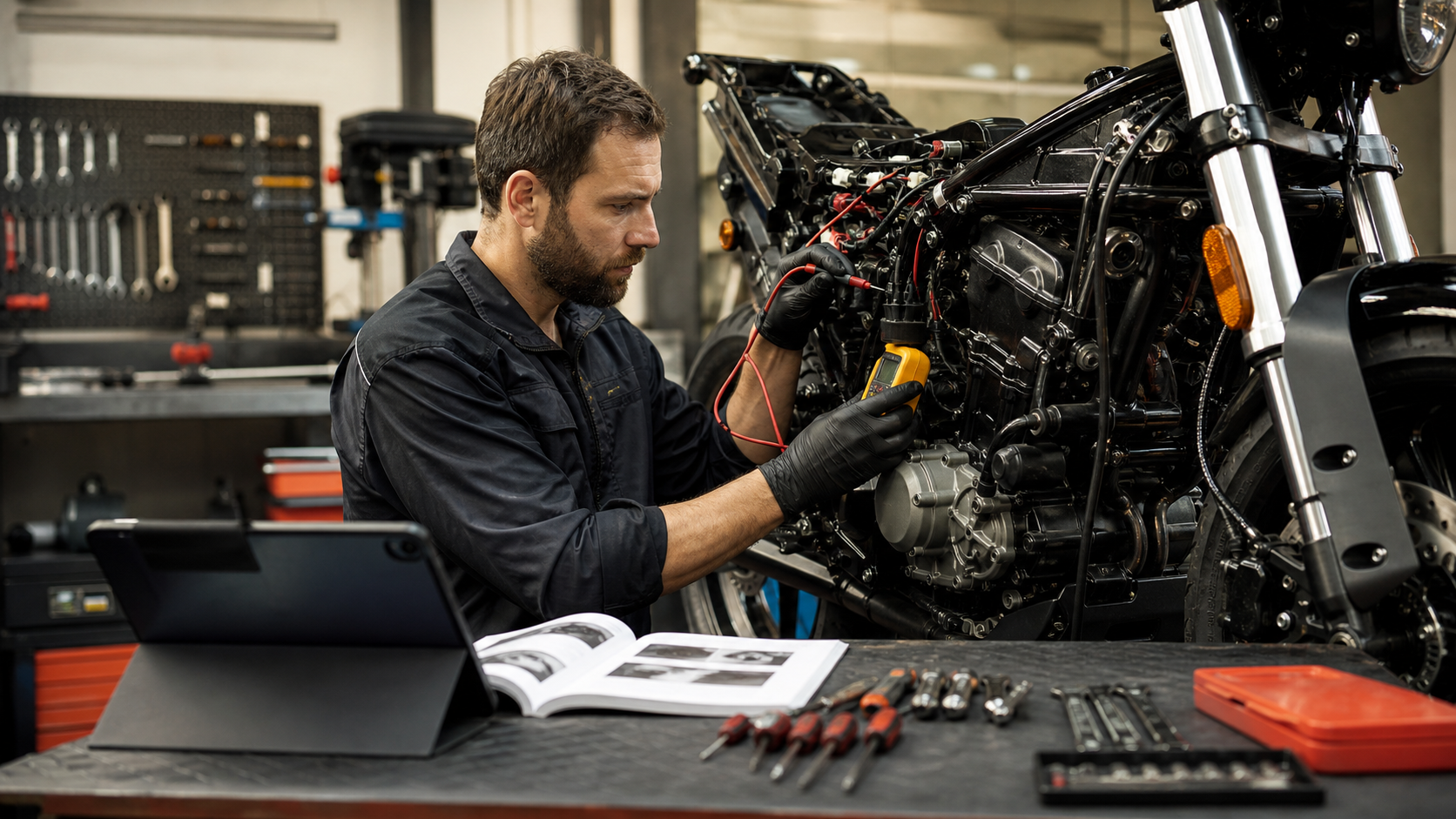
I searched motorcycle mechanic course online because I want to learn properly before I start pulling my own bike apart. I can do oil, chain cleaning, basic pads, and battery changes, but I do not want to become the person who removes half the fairing and then posts a photo of one lonely bolt asking where it came from.
My question is direct: can a motorcycle mechanic course online actually prepare a beginner for real diagnosis, or is it only useful after you already have workshop experience? I am not looking for fake certificates. I want a path: tools, safety, service logic, electrical testing, brakes, carb or EFI basics, and when to stop.


Discussion
27 repliesI took a motorcycle mechanic course online mainly because I was embarrassed to ask basic questions at a local shop. The biggest benefit was vocabulary. Once I knew what a stator, relay, ground strap, pilot jet, and caliper slide pin were, I could ask better questions.
The photo-before-disassembly advice should be printed on every toolbox. My first scooter job turned into a treasure hunt because I trusted my memory. My memory is not a service manual.
For me the key part of a motorcycle mechanic course online is electrical testing. Everyone says buy a multimeter, but nobody tells beginners what a useful reading looks like under load.
Can a motorcycle mechanic course online teach brakes safely? I can change pads, but bleeding and caliper cleaning still make me nervous.
What beginners usually need from this kind of course
Thomas Spagnoli here. When people ask about a motorcycle mechanic course online, I usually hear three different needs inside the same question. First, a beginner wants confidence before touching a real bike. Second, a rider wants to save money on service and diagnostics. Third, someone is exploring whether motorcycle mechanics could become work, side income, or a serious skill. A good page and a good forum thread should answer all three without making silly promises.
A motorcycle mechanic course online is enough to prepare your mind, your checklist, and your hands for basic work. It is not enough to replace supervised experience on advanced repairs. That is not a weakness. That is how mechanics works. You learn the logic online, you practice safely on simple jobs, and you build judgment one measured result at a time.
What a beginner should learn first
The first module of a motorcycle mechanic course online should be safety and inspection. Before tuning, remapping, carburetor jetting, or ECU talk, you need to recognize unsafe tires, contaminated brake fluid, seized caliper pins, loose head bearings, charging problems, fuel leaks, damaged wiring, and bad previous-owner repairs. A beginner who can inspect well is already useful.
The second module should be maintenance as diagnosis. Oil condition, spark plug color, air filter state, valve clearance, chain slack, coolant level, battery health, brake pad wear, and tire pressure are not separate from diagnosis. They are the baseline. If the baseline is wrong, every fault looks mysterious.
The third module should be electrical fundamentals. A motorcycle mechanic course online must teach rest voltage, cranking voltage, charging voltage, voltage drop, grounds, relays, fuses under load, connector corrosion, and why a multimeter reading can lie when the circuit has no load. Many expensive mistakes begin with a beautiful but meaningless 12 volts on a weak circuit.
How to study without fooling yourself
Do not watch ten hours and then attack the bike. Watch one lesson, perform one safe check, write the result down, and compare it with the expected range. That is how a motorcycle mechanic course online becomes a workshop habit instead of entertainment. The notebook matters more than people think.
For anyone reading this later, the free starting point is this page: motorcycle mechanic course online. It is built to give structure before the forum details. Use the course for the learning path and use forum threads like this one for real cases, awkward questions, and second opinions.
My honest answer: yes, a motorcycle mechanic course online can prepare a beginner very well for basic service, inspections, electrical checks, no-start logic, and informed conversations with a workshop. It cannot give you the smell of burned clutch plates through the screen, unfortunately. We are good, but not magic.
I like that answer. Online learning is good, but the course should also tell you when to not be brave. Bravery with brake fluid sounds expensive.
I searched motorcycle mechanic course online after my bike had a hot no-start. I thought it was fuel pump. It was battery voltage dropping during crank. That one lesson saved me from replacing the wrong part.
What tools would you buy before starting? I do not want to buy a giant set and then discover half of it is shiny furniture.
Start with metric sockets, quality screwdrivers, combination wrenches, torque wrench, multimeter, test light, feeler gauges, spark plug socket, tire pressure gauge, brake cleaner, nitrile gloves, eye protection, and the correct service data. A motorcycle mechanic course online should teach you why each tool exists.
Service data is the piece people skip. I watched three videos for my model and all three gave different torque values. The manual ended the argument.
Does a motorcycle mechanic course online need to include carburetors? Newer bikes are EFI, but cheap learner bikes near me are still carb or weird scooter carb setups.
It should include carburetors. Carburetors teach fuel level, vacuum leaks, pilot circuits, needle behavior, main jet limits, and mechanical cause and effect. EFI teaches sensors and commanded fuel. Both make you better.
I wish more lessons explained scanner limits. My car friends clear codes like they are deleting emails. On bikes, I want to know the freeze frame and conditions before anything gets erased.
A motorcycle mechanic course online helped me stop buying parts. Before that I was a proud owner of three good relays and one still broken motorcycle.
Career question: if someone finishes a motorcycle mechanic course online, what should they do next if they want actual shop work?
Document your work. Build a small portfolio of safe maintenance, inspections, voltage tests, brake service, valve checks if appropriate, and diagnostic notes. Then look for supervised entry-level experience. The course gives language and structure; the shop gives pace, repetition, and accountability.
The portfolio idea is smart. Photos, measurements, before and after notes, and torque specs used would show more than saying "I love bikes" in an interview.
I came here from searching motorcycle mechanic course online and honestly expected a sales pitch. This thread is more useful because people are asking the messy beginner stuff.
Question: should you practice on your daily bike or buy a cheap project?
Do maintenance practice on a healthy daily bike only when the job is simple, safe, and you have the right tools. For deeper learning, a cheap common project bike is better. Avoid rare models, missing wiring, severe crash damage, and bikes with no documents or parts support.
Common project bike is the way. I bought something rare once and spent more time hunting parts than learning mechanics.
The exact phrase motorcycle mechanic course online kept showing me pages that talk about certification first. I care more about "what can I safely do this month?" This thread answers that.
One thing I would add: learn cleaning. Clean connectors, clean calipers, clean chain, clean work area. Half of beginner mechanics is just seeing what is actually there.
Correct. Clean work is diagnostic work. Dirt hides leaks, corrosion, cracks, missing fasteners, and poor previous repairs. A motorcycle mechanic course online should make cleanliness feel practical, not cosmetic.
I joined the free course from the link. I am starting with inspection and electrical basics before touching carb settings. My bike is already relieved, I think.
For anyone reading later, my summary is: use the motorcycle mechanic course online for structure, use the forum for real examples, and do not skip safety just because tuning sounds more fun.
That summary is exactly right. Start with the free motorcycle mechanic course online, take notes, practice on simple checks, and bring uncertain cases here. The goal is not to memorize repairs. The goal is to become the person who tests before guessing.