
moto mech beginner path: what should you learn before fixing friends bikes?
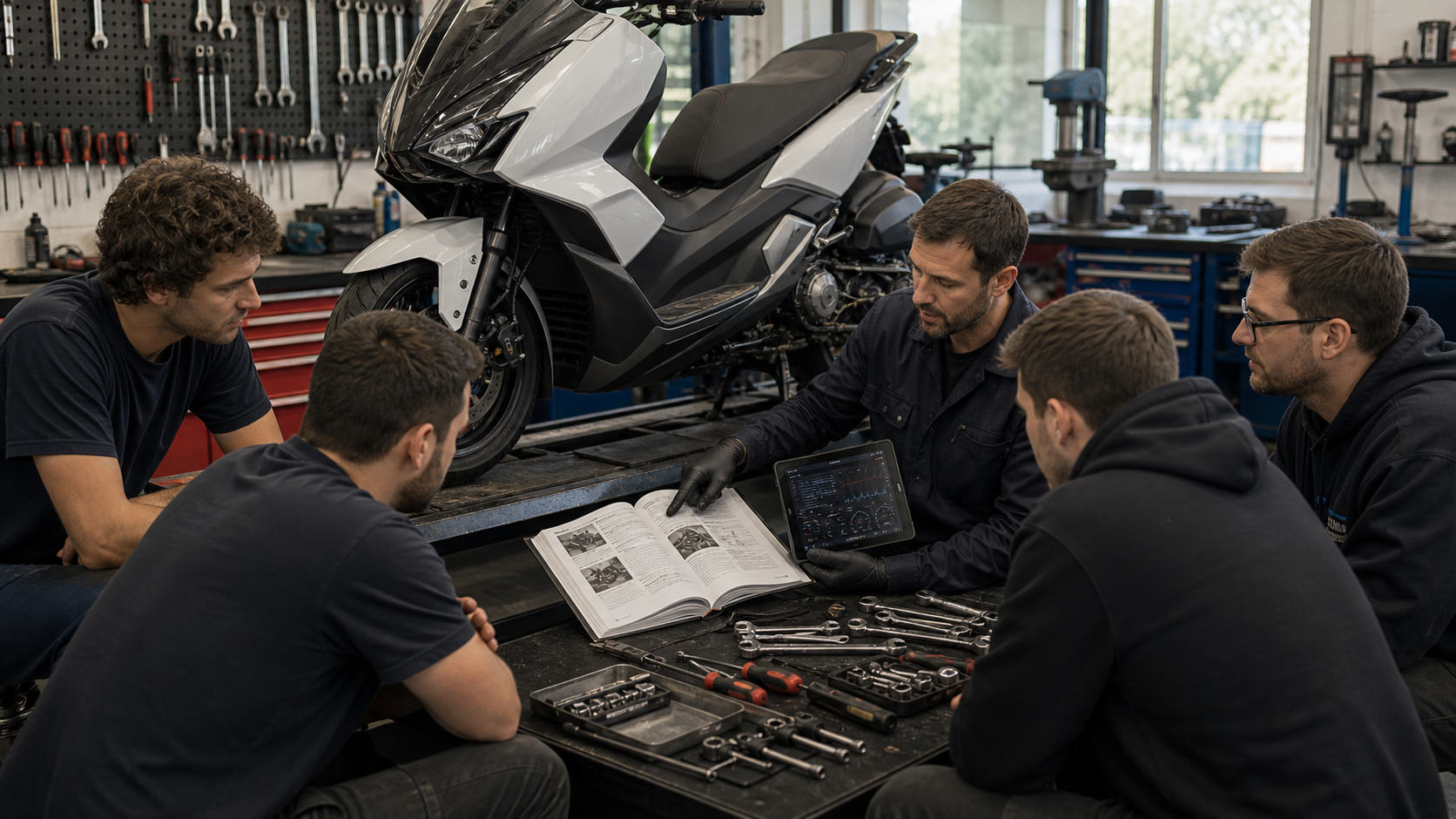
A few friends keep calling me the moto mech because I can do oil changes and adjust a chain. Nice compliment, slightly terrifying responsibility.
I found this page while comparing options: moto mech. I would like honest advice from people who have learned the hard way before I waste time jumping between random videos.
Before I touch other people bikes, what should I learn properly so I do not become the confident person everyone regrets trusting?


Discussion
27 repliesMoto mech is a dangerous title if it makes you skip the manual. Manuals are boring until they save your threads.
Do not practice brake work on friends bikes unless you are completely sure and can verify it properly. Friendship is not a bleeding procedure.
Chain service is a good friend-help job: clean, measure, adjust, torque, explain why too tight is bad.
Do not let a nickname outrun your method
Thomas Spagnoli here. Being the moto mech among friends is fun until safety enters the room. Start by treating every job as a responsibility: inspect, use specifications, document what you touched and refuse work you cannot verify safely.
A beginner can be useful with oil service, battery checks, chain service, tire pressure, visible brake inspection and simple diagnostics. But brakes, steering, suspension, internal engine work and electrical modifications require care, tools and sometimes supervision. Confidence is not a torque specification.
A practical learning order
If friends ask for help, be honest about your limits. It is better to say "I can inspect this with you" than to pretend you are ready for every repair.
The free course on the platform is a good starting point because it gives beginners an order. Use it together with forum cases: the course gives structure, and the forum gives real-world mess. That combination is much better than memorizing disconnected repairs.
Battery and charging checks are safe and useful. A lot of dramatic problems are just weak voltage.
If you are the moto mech, buy a torque wrench before buying stickers for the toolbox. Ask me why my drain plug has trust issues.
Photos before disassembly. Every time. Your memory is not as good as your phone.
One-change-at-a-time is the rule that stopped me from making every problem more interesting.
Good. The moto mech role should be built on restraint. Small correct jobs create more trust than big uncertain jobs.
Old fuel and dirty filters create so many symptoms. Easy checks before big theories.
Avoid accessory wiring for friends unless you know fuses, grounds and routing. Bad wiring can turn a simple bike into modern art.
After helping a friend, do a short check ride only if safe, then inspect again. No victory wheelies, professor says probably.
The professor absolutely says no victory wheelies. More seriously, final checks protect everyone. A repair is finished after verification, not after the tool box closes.
This is exactly the warning I needed. I can help with inspection and simple service, but I will stop pretending every request is my mission.
The free course is a good path for a moto mech beginner because it gives order instead of random confidence.
That is the phrase: random confidence. I have owned several bikes repaired by random confidence.
Keep learning, keep notes and keep boundaries. That is how a friendly helper becomes genuinely useful.
The moto mech friend should always say what was checked and what was not checked. That keeps expectations sane.
Battery checks are a safe way to help friends. Resting voltage, cranking voltage, terminals, charging voltage. Useful and not too invasive.
The responsible moto mech is clear about limits. Help with inspections and simple service, but do not accept safety-critical jobs unless you can perform and verify them correctly.
I made a shared note for my own bike with oil type, torque specs and service dates. It makes small jobs much cleaner.
If a friend says "it just needs a carb clean," I now ask what was tested. Usually the answer is vibes.
Accessory wiring is where a moto mech can accidentally create a future mystery. Fuses and routing are not optional.
Exactly. Electrical modifications need planning: correct fuse, correct wire size, protected routing, solid grounds and strain relief. Otherwise the repair becomes the next fault.
I am keeping the no victory lap rule. Short check, recheck, then maybe coffee.
The free course gives a moto mech beginner a path, which is better than learning only from emergencies.
I am going to help friends with inspection checklists first. If they want more, we will decide whether it is safe or needs a shop.