
aprilia rx 125 tuning: more pull without making the bike unreliable
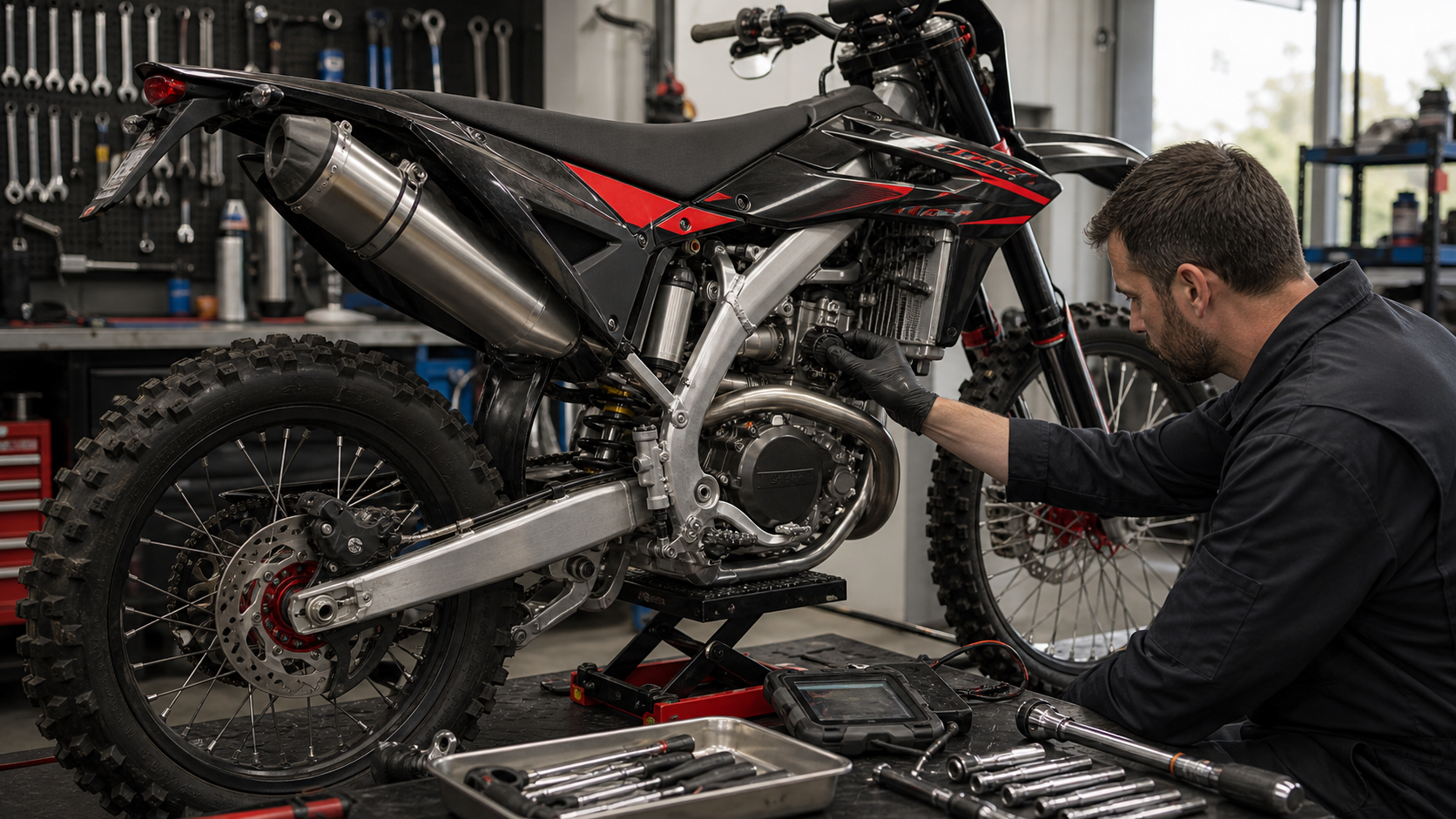
I am opening a proper aprilia rx 125 tuning thread because most advice I find is either "put an exhaust on it" or "just buy a bigger bike", which is not very helpful when you actually own an RX 125, ride it every day, and still need it to start on Monday morning.
My goal with aprilia rx 125 tuning is not to make impossible horsepower. I want better pull out of slow corners, cleaner response on hills, sensible gearing for mixed road and light trail riding, and no reliability drama. I would also like to understand what has to be checked before tuning: chain and sprockets, valve clearance, air filter, spark plug, ECU faults, exhaust leaks, throttle body or carb setup depending on version, and whether the bike is already healthy.
There is an older related discussion here: aprilia rx 125 tuning. I wanted a longer thread where people talk through the real choices instead of just throwing part names around like confetti at a parts counter.


Discussion
47 repliesI changed gearing on my RX-style 125 and it helped more than the exhaust ever did. One tooth down on the front made slow trail sections easier, but road cruising got busier. That is the tradeoff nobody mentions when they say aprilia rx 125 tuning is cheap and easy.
The baseline point is painfully true. I thought my bike needed tuning, then found the rear brake dragging and the chain too tight. Fixed both and suddenly I had discovered free horsepower, also known as not fighting the motorcycle.
I ride mixed roads and muddy lanes. For me aprilia rx 125 tuning means making first and second gear nicer, not chasing top speed. If the bike can climb without clutch abuse, I am happy.
Question for Thomas: how do you decide if gearing is too short? Is it just rpm at cruising speed, or are there other signs?
What usually matters on an Aprilia RX 125
Thomas Spagnoli here. The first thing to understand about aprilia rx 125 tuning is that a 125 has very little spare power to waste. That does not mean tuning is pointless. It means every small mistake is more noticeable. A dirty air filter, low tire pressure, stretched chain, wrong gearing, tight valve clearance, weak battery, dragging brake, worn clutch, or poor fueling can make the bike feel slow before any performance part enters the conversation.
For most riders, aprilia rx 125 tuning should be about response and usability, not fantasy numbers. You want the bike to pull cleanly, start easily, shift well, run at correct temperature, and feel predictable on the road and trail. If a modification makes it louder but harder to live with, you did not tune the bike; you changed the soundtrack.
1. Build a healthy baseline first
Before spending money, inspect the basics. Check tire pressure, chain slack, sprocket wear, clutch free play, brake drag, wheel bearings, air filter, spark plug color, coolant level, oil condition, battery voltage, charging voltage, throttle cable condition, intake boots, exhaust gasket, and stored fault codes if the bike is EFI. A surprising amount of aprilia rx 125 tuning starts with fixing what was already tired.
If the bike has poor idle, flat spots, hard starting, or weak top-end, do not assume it needs performance parts. It may need valve clearance, a clean injector, correct fuel pressure, a clean carburetor, correct jetting, fresh plug, or a sealed intake. Baseline work is not boring. Baseline work is where the bike tells the truth.
2. Gearing changes can be more useful than engine parts
On a small-capacity enduro-style 125, gearing matters. A smaller front sprocket or larger rear sprocket can make the bike feel stronger at low speed and on trails, but it can also raise rpm on the road, reduce relaxed cruising, and make top speed worse. Taller gearing can calm the bike down on road sections, but it may make hills and slow trails miserable. Good aprilia rx 125 tuning starts by choosing the use case: city, school commute, country roads, trail, or mixed riding.
Do one gearing change at a time and keep the old sprocket. After the change, test hill starts, slow corners, cruising rpm, chain adjustment range, speedometer behavior if affected, and whether first gear still feels usable. If the bike becomes annoying after two days, the spreadsheet did not win. The rider did not like it.
3. Exhaust and intake need matching, not wishful thinking
A legal exhaust can reduce weight and change character, but an open pipe without correct fueling can create lean running, heat, popping, poor throttle response, and inspection problems. For aprilia rx 125 tuning, do not treat the exhaust as a magic horsepower drawer. Ask whether it is road legal, whether it requires fueling changes, whether it keeps useful low-end torque, and whether you can live with the noise.
The same goes for air filters and airbox changes. More noise at the intake does not automatically mean more power. Poor sealing or filtration is expensive dirt delivery. If the bike is EFI, watch trims and symptoms. If carbureted, jetting must match intake and exhaust changes. Either way, plug reading, temperature, throttle response, and real riding matter more than social media sound clips.
4. ECU, derestriction and legal limits
Depending on year and market, riders may talk about ECU restrictions, throttle limits, exhaust restrictions, gearing, or mapping. Be careful. Road legality, license category, insurance, emissions and inspection rules vary by country. A bike that is legal in one place may be a problem in another. Sensible aprilia rx 125 tuning keeps the bike usable and legal for the rider.
If anyone offers a black box or remap, ask what changes, how it was tested, whether it keeps safe air-fuel ratios, whether it affects diagnostics, whether it can return to stock, and whether it was developed for your exact model and year. "Works on 125s" is not a technical answer. That is a shrug wearing a price tag.
5. Practical tuning path
My advice for aprilia rx 125 tuning is simple: make the bike perfect first, then tune one thing at a time. On a 125, correct gearing and a clean baseline often feel better than expensive parts fitted to a neglected bike. If you want to learn the diagnostic order, use the free motorcycle mechanics course on this platform and bring test results back to the forum before buying parts.
I am glad you mentioned carb and EFI versions. People answer every RX 125 question like all years are identical. They are not. A jetting answer does not help a fuel-injected bike, and a remap answer does not clean a pilot jet.
A friend put an open pipe on his 125 and it got louder but weaker low down. He called it racing. I called it waking the village while losing to a hill.
Would a high-flow air filter be worth it if everything else is stock? I mostly want cleaner throttle response.
If the stock filter is dirty, a fresh correct filter may feel better. A high-flow filter by itself is not guaranteed improvement. Check sealing, filtration quality, fueling response, and whether the bike actually needs more airflow. On small engines, poor intake choices can hurt low-speed response.
I did sprockets first, then a legal exhaust later. The sprockets changed how the bike rode. The exhaust changed how much I smiled in tunnels. Very different categories.
For aprilia rx 125 tuning, I would add clutch condition. Mine slipped slightly at high rpm and made the bike feel flat. New plates and correct adjustment made it feel normal again.
Does anyone measure before and after, or are we all using the traditional method of "it feels faster because I spent money"?
I use the same hill near my house. Same gear, same starting speed, same wind if possible. Not scientific laboratory stuff, but enough to catch bad changes.
That is a good practical method. For a 125, use repeatable tests: same route, same rider, same tire pressure, similar temperature, and written notes. Test roll-on, hill climb, start behavior, fuel use, and cruising comfort. A tuning part that only feels better for five loud minutes may not be better.
Legal exhausts are expensive, but at least they do not turn every ride into a police-themed treasure hunt. I learned that lesson on a previous bike.
I would love a checklist for buying a used RX 125 before tuning. Half the bikes around me already have mystery wiring, missing baffles, and chain slack measured in calendar months.
Used-bike checklist: cold start, charging voltage, brake drag, frame and fork condition, wheel bearings, chain and sprockets, airbox completeness, exhaust leaks, coolant condition, oil leaks, clutch feel, gearbox shift quality, fault lights, and whether all modifications can be identified. Do not tune a mystery. First make it understandable.
The insurance point matters. In my country a derestricted 125 can create license and insurance trouble. People talk about power, then get very quiet when paperwork appears.
I ride trails, so I care more about heat and clutch abuse than top speed. Shorter gearing helped, but I also had to learn to stop slipping the clutch like I was mixing cake batter.
Spark plug reading helped me catch a lean issue after intake changes. Not perfect science by itself, but it gave me a warning before I cooked something.
Spark plug reading is useful but must be interpreted carefully. Modern fuels, riding style, plug age and engine design all affect color. Use it together with symptoms, temperature, fueling data if available, and mechanical checks. Do not rely on one clue when tuning a small engine.
The older thread linked above is shorter, but this one answers the questions I actually had. Especially gearing versus exhaust.
My RX 125 felt slow because the throttle cable had too much slack and the air filter was disgusting. The previous owner apparently believed maintenance was a rumor.
I changed rear sprocket size and forgot chain length might matter. That was a fun afternoon of learning, by which I mean swearing politely.
For daily riding, I would rather have reliable starting and smooth low rpm than a tiny bit more top end. A 125 that starts every morning is already winning.
That is the correct mindset. Daily aprilia rx 125 tuning should improve the bike you actually ride. Smooth starting, predictable throttle, legal noise, correct gearing, clean shifting and good fuel economy often matter more than the last number on a speedometer.
Can ECU tuning help if the bike has emissions lean spots, or is that risky?
It can help when done professionally and legally, but it is risky when done blindly. Ask for model-specific experience, safe fueling, diagnostic compatibility, reversibility and road legality. If the tuner cannot explain the method, do not let them experiment on your engine.
I like "do not tune a mystery." That describes half the used 125 market. My friend bought one and found three different electrical tape colors holding the dream together.
Airbox completeness is huge. People cut holes, lose snorkels, then complain about rain issues and weird fueling. Sometimes stock parts are not the enemy.
I am going to service mine first, then decide on gearing. Annoyingly sensible, but this thread has made me suspicious of shiny parts.
For anyone reading later: aprilia rx 125 tuning is not one magic part. It is baseline, gearing, fueling, legal exhaust, and not lying to yourself after spending money.
Exactly. Start with measurements and maintenance. Tune one area at a time. Keep the old parts. Test honestly. A well-set-up RX 125 can be a brilliant small bike, but it rewards patience more than impulse buying.
I joined the free course after this because I need to learn the diagnostic order. I know how to buy parts; I need to learn how to stop buying the wrong ones.
Best line here is "that is a shrug wearing a price tag." I have definitely bought one of those before.
One thing I wish I understood earlier about aprilia rx 125 tuning is that tires can change the feeling almost as much as gearing. I fitted more aggressive off-road tires and then wondered why the bike felt slower on the road. It was not the engine. It was rolling resistance, tire pressure, and my own brilliant decision to compare two totally different setups.
For aprilia rx 125 tuning I would always write down the current front and rear sprocket sizes before buying anything. People sell used 125s with random gearing already fitted, then the next owner thinks stock is terrible. Sometimes the first tuning step is discovering what the bike actually has.
My RX had a small intake leak and every tuning conversation was pointless until that was fixed. It idled badly, felt weak off the bottom, and popped on decel. After a new boot and proper clamps, the same bike felt like it gained power. So yes, aprilia rx 125 tuning should begin with boring rubber parts too.
That is a very important point. On a small engine, an intake leak is not a small detail. It changes mixture, idle quality, throttle response and temperature. Before aprilia rx 125 tuning, spray-test carefully where appropriate, inspect boots visually, check clamps, and make sure the airbox is complete and sealed. A 125 does not have enough torque to hide bad basics.
I tried a shorter gearing setup for trail riding and loved it off-road, but the road ride to the trail became annoying. The engine sounded busy and I kept looking for a gear that did not exist. My lesson: aprilia rx 125 tuning has to include the boring ride to the fun place, not only the fun place.
Do not ignore ignition parts. My bike had a weak plug cap connection and it felt like fueling at first. New plug, trimmed lead, correct cap, and the hesitation disappeared. I almost bought an exhaust to solve a spark problem, which is peak internet mechanic behavior.
Ignition checks belong in the baseline. Spark plug type and gap, cap resistance, lead condition, coil connector, grounds and battery condition can all affect how cleanly the engine pulls. Good aprilia rx 125 tuning separates ignition, fuel, compression and gearing instead of throwing all symptoms into one bucket called performance.
People also need to remember license rules. Where I live, pushing a 125 beyond its legal category can cause insurance trouble. I am not against aprilia rx 125 tuning, but I want my bike to be legal if something happens. The fastest bike in the world is useless if paperwork eats you alive.
I put the stock snorkel back after the previous owner removed it. The bike got quieter and smoother at small throttle. Maybe it lost some heroic garage noise, but it gained actual manners. Not every factory part is a conspiracy against fun.
Exactly. Factory intake parts are often there for airflow stability, filtration, water management and noise control. Removing them can make the bike sound more aggressive while reducing useful response. For aprilia rx 125 tuning, only change the airbox when you understand the fueling consequence and can test the result.
For anyone doing aprilia rx 125 tuning on a used bike, check clutch adjustment before judging acceleration. Mine had almost no free play and slipped under load. I thought the motor was weak. It was the clutch asking politely for help.
This thread convinced me to do a baseline weekend first: fluids, plug, air filter, chain, tire pressure, brake drag, intake boot and sprocket count. If it still feels lazy after that, then I will think about gearing. Annoyingly mature, but probably cheaper.